IN SEARCH OF THE "TTAQS" METHAPOR.


BACKGROUND:
 
(Tubular Tripartite Artificial Quantum Synapse) "TTAQS". 

A scientific challenge in this era of knowledge is: to analyze to discern the content of the design rules and structural specifications that determine our human nature; attributed to "The Brain": where there are approximately "90 billion" neurons and about "90 trillion" synaptic connections.
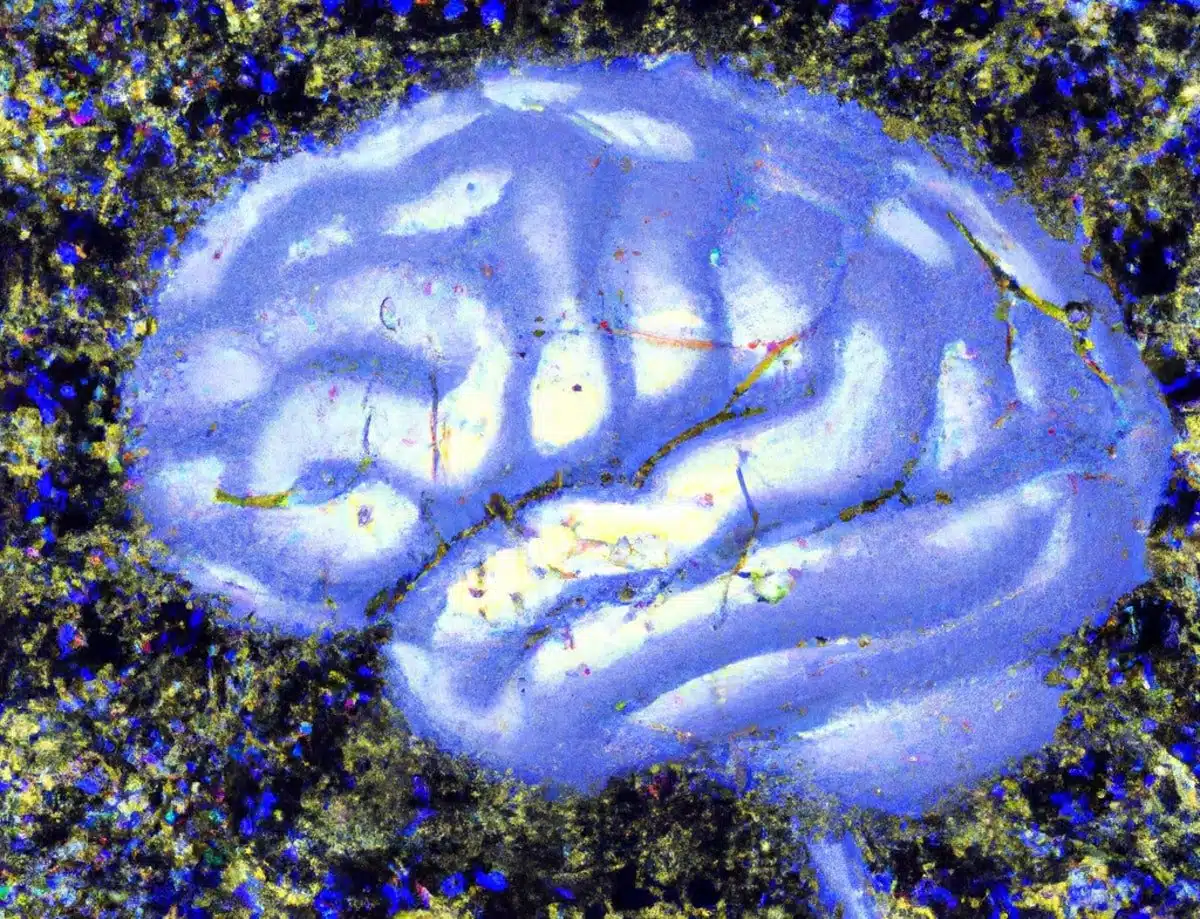


When we study this unstable matrix "The Brain"; with memory of addressable content that runs in parallel: "Biocomputational" cognitive studies, molecular and behavioral, Understanding Cognition. that crosses the cellular level constituted by networks; that neuroscience explores in the functioning of synaptic neurotransmitters, neuro-chemo-physiological mechanisms, ... etc. Responsible for learning, neuronal genetic control and complex operational structures involved: in memory, perception, speech and consciousness of reality, etc. .    Inspire the research "Brain Design".


Artificial intelligence (AI) through its neural networks and synaptic weights ("W"); computational neuroscience, expert systems, and other new exponential technologies to study the "brain"; They are used for the behavior of neurons, pattern recognition and memory of human brain cells. memory and nerves, and the use of mathematical formalization in information processing: (vision, touch, smell and many other stimuli that manipulate humans). For example, among 1000 different proteins, 200 proteins are responsible for the conversion of "information", which is driven by patterns of electrical activity into neurochemical signals.

Synaptic weighting in single flux quantum neuromorphic computing


Presynaptic Molecular Determinants of Quantal Size.


Parsing Out the Variability of Transmission at Central Synapses Using Optical Quantal Analysis


The Neurological Mechanisms and complex simulations of functional Synaptic Neuroplasticity ; Biological / Evolutionary, of the "Biological and Artificial" synapses    It forces brains and computers to a higher degree of scalar complexity, by : Synaptic Interconnections...?


GLIA: (glial cells. Astrocytes, oligodendrocytes and microglia); which together with the Ca 2+ ION.   As : "The Biological TRIPARTITE element".


An in-depth discussion about Quantum Computing with professor Andrea Morello from UNSW. Over a century after the establishment of quantum mechanics, the popular – and sometimes even the professional – literature is still permeated by the myth that quantum is weird and no one understands it. Yet, the 21st century will probably go into history as the era of quantum engineering, when the peculiar effects allowed by quantum physics are harnessed to create unprecedented functionalities.


    January 20, 2016 MEMORY CAPACITY OF BRAIN IS 10 TIMES MORE THAN PREVIOUSLY THOUGHT Data from the Salk Institute shows brain’s memory capacity is in the petabyte range, as much as entire Web


    Comments

    ‘It will change everything’: DeepMind’s AI makes gigantic leap in solving protein structures

    ‘It will change everything’: DeepMind’s AI makes gigantic leap in solving protein structures
    An artificial intelligence (AI) network developed by Google AI offshoot DeepMind has made a gargantuan leap in solving one of biology’s grandest...

    Reliable Multivalued Conductance States in TaOx Memristors through Oxygen Plasma-Assisted Electrode

    Reliable Multivalued Conductance States in TaOx Memristors through Oxygen Plasma-Assisted Electrode
    Keywords: artificial solid-state synapses; in situ STEM analysis; multivalued atomic switching; TaOx memristors

    Human Brain/Cloud Interface.

    Human Brain/Cloud Interface.
    Figure 1. Artistic representation of neurons (with blue processes) and glial (white) cells. [Image credit: Yuriy Svidinenko, Nanobotmodels Company]..

    Tapping into the brain’s star power No longer just ‘brain glue’, astrocytes are coming to the fore

    Tapping into the brain’s star power No longer just ‘brain glue’, astrocytes are coming to the fore
    Astrocytes have a distinctive 3D branching shape.Credit: National Center for Microscopy and Imaging Research, UCSD.In the mid-1850s, German anatomist Rudolf Virchow and others examining brains under the microscope noticed mysterious structures filling the space around and between the neurons that held their interest. Virchow dubbed these structures nervenkitt, literally ‘nerve-glue’, and translated as ‘neuroglia’...

    Basic quantum computation achieved with silicon for first time

    Basic quantum computation achieved with silicon for first time
    (Image: Mehau Kulyk/SPL) The ingredients for superfast computers could be nearly in place. For the first time, researchers have demonstrated that two silicon transistors acting as quantum bits can perform a tiny calculation. Now it’s just a question of using these as the building blocks of a larger quantum computer – taking advantage of the very material that is ubiquitous in conventional electronics.

    The NOMFET Transistor

    The NOMFET Transistor
    This organic transistor, based on pentacene and nanoparticles of gold and called NOMFET (Nanoparticle Organic Memory Field-Effect Transistor), has opened the way to new generations of computers inspired by the...

    Computer Scientists Expand the Frontier of Verifiable Knowledge.

    Computer Scientists Expand the Frontier of Verifiable Knowledge.
    By interrogating entangled quantum computers, a person can verify the answers to enormously complicated problems.

    An Ethical Future for Brain Organoids Takes Shape.

    An Ethical Future for Brain Organoids Takes Shape.
    Cells in a cerebral organoid differentiate and form structures related to those seen in embryonic tissues, as

    Boosting Synaptic Plasticity to Accelerate Learning.

    Boosting Synaptic Plasticity to Accelerate Learning.
    A new DARPA program will explore using peripheral nerve stimulation to enhance learning processes in the brain...

    These artificial neurons could replace injured nerves

    These artificial neurons could replace injured nerves
    Nerve injuries remain the most difficult to solve. However, artificial neurons designed this Swedish group could end this complicated problem in the not too distant future.The nervous system is...

    Modified superconductor synapse reveals exotic electron behavior September 18, 2018, Joint Quantum

    Modified superconductor synapse reveals exotic electron behavior September 18, 2018, Joint Quantum
    JQI researchers modified a Josephson junction to include a sliver of topological crystalline insulator (TCI). Using this circuit, they detected signs of exotic quantum states lurking on the TCI's surface. Credit: E. Edwards/JQI Read more at: https://phys.org/news/2018-09-superconductor-synapse-reveals-exotic-electron.html#jCp...

    Ultra-thin memory storage device paves way for more powerful computing

    Ultra-thin memory storage device paves way for more powerful computing
    Illustration of a voltage-induced memory effect in monolayer nanomaterials, which layer to create "atomristors," the thinnest memory storage device that could lead to faster, smaller and smarter computer chips. Credit: Cockrell School of Engineering, The University of Texas at Austin

    A high-performance, low-energy artificial synapse for neural network computing February 21, 2017 by

    A high-performance, low-energy artificial synapse for neural network computing February 21, 2017 by
    Alberto Salleo, associate professor of materials science and engineering, with graduate student Scott Keene characterizing the electrochemical properties of an artificial synapse for neural network computing. They are part of a team that has created the new device. Credit: L.A. Cicero

    High-speed quantum memory for photons September 8, 2017

    High-speed quantum memory for photons September 8, 2017
    Schematic of a quantum network: single photons transmit quantum information between the network nodes, where they are stored in an atomic gas. Credit: University of Basel, Department of Physics Read more at: https://phys.org/news/2017-09-high-speed-quantum-memory-photons.html#jCp

    IBM scientists imitate the functionality of neurons with a phase-change device August 3, 2016

    IBM scientists imitate the functionality of neurons with a phase-change device August 3, 2016
    An artistic rendering of a population of stochastic phase-change neurons which appears on the cover of Nature Nanotechnology, 3 August 2016. IBM scientists have created randomly spiking neurons using phase-change materials to store and …more Read more at: http://phys.org/news/2016-08-ibm-scientists-imitate-functionality-neurons.html#jCp

    Organic Core-sheath Nanowire Artificial Synapses With Femtojoule Energy Consumption.

    Organic Core-sheath Nanowire Artificial Synapses With Femtojoule Energy Consumption.
    Fig. 1 Schematic of biological neuronal network and an ONW ST that emulates a biological synapse. The conductive lines and probe (A′) mimic an axon (A) that delivers presynaptic spikes from a preneuron to the presynaptic membrane. The mobile ions in the ion gel move in the electrical field analogous to the neuron transmitters in …

    Interconnected single atoms could make a ‘quantum brain’ 07 Mar 2021 Isabelle Dumé

    Interconnected single atoms could make a ‘quantum brain’ 07 Mar 2021 Isabelle Dumé
    Alexander Khajetoorians. Courtesy: Scanning Probe Microscopy, Radboud

    Proposed quantum nano-MRI could generate images with angstrom-level resolution December 1, 2016 by

    Proposed quantum nano-MRI could generate images with angstrom-level resolution December 1, 2016 by
    The proposed nano-MRI setup consists of an atomic qubit positioned 2-4 nm below a surface holding a molecule. The qubit acts as both the sensor and...

    DARPA-funded efforts in the development of novel brain–computer interface technologies

    DARPA-funded efforts in the development of novel brain–computer interface technologies
    Fig. 1. Idealized bidirectional brain–computer interface for closed-loop prosthetic control. Neural correlates of motor intent are recorded from electrode arrays implanted in motor areas of the brain such as the primary motor cortex (M1). ..

    This is What Happens When Deep Learning Neural Networks Hallucinate

    This is What Happens When Deep Learning Neural Networks Hallucinate
    A Reverse Hallucination Technique So the researchers decided to reverse the process, to “turn it upside down” in order to better visualize the network’s inner workings. By giving it free reign and asking it to interpret and “enhance an input image in such a way as to elicit a particular interpretation,” they were hoping to get more insight into what trained features the networks understood and what they did not.

    Quantum Mechanics could be responsible for photosynthesis, smell, and knowledge.

    Quantum Mechanics could be responsible for photosynthesis, smell, and knowledge.
    A sea slug neuron can use quantum forces to process information. In humans, quantum physics may be essential for thought...

    Live visualizations of single isolated tubulin protein self-assembly via tunneling

    Live visualizations of single isolated tubulin protein self-assembly via tunneling
    (a). Tubulin molecule (left most). Series of STM images (2 V tip bias 10 pA current) of three protein molecules, they form a perfect linear assembly and stabilize. Scale bar for first four images 3.8 nm, for the last two images (one above another), scale bar is 5 nm. Protofilaments connected (extreme right), scale bar 8 nm. (b). STM images at 2.1 V tip bias 30 pA current, left to right frequencies are noted in Hz, M means mega 106 Hz, G means Giga 109 Hz, scale bar for all images 4 nm. (c).

    Ray Kurzweil: In The 2030s, Nanobots In Our Brains Will Make Us ‘Godlike’

    Ray Kurzweil: In The 2030s, Nanobots In Our Brains Will Make Us ‘Godlike’
    KTSIMAGE VIA GETTY IMAGES An artistic rendering of a neural network with an artificial connection in a nanotechnology concept.

    Towards a High-Resolution, Implantable Neural Interface.

    Towards a High-Resolution, Implantable Neural Interface.
    Neural Engineering System Design program sets out to expand neurotechnology capabilities and provide a foundation for future treatments of sensory deficits...

    Lab-grown ‘mini brains’ produce electrical patterns that resemble those of premature babies.

    Lab-grown ‘mini brains’ produce electrical patterns that resemble those of premature babies.
    A slice through a brain organoid shows more mature cortical neurons on the outer edge of the structure.Credit: Muotri Lab/UC San Diego ‘Mini brains’ grown in a dish have spontaneously produced human-like brain waves for the first time — and the electrical patterns look similar to those seen in premature babies...

    Neuromorphic Chip That Simulates Brain Activity Developed by Researchers By Rechelle Ann Fuertes -

    Neuromorphic Chip That Simulates Brain Activity Developed by Researchers By Rechelle Ann Fuertes -
    MIT Researchers have reportedly Designed a Neuromorphic Chip that behaves like real Human Brain cell connections. While experts have made significant progress in the field of Artificial Intelligence in recent years, replicating Human Brain activity is still a major hurdle to true (AI). But things might change now that researchers from the Massachusetts Institute of Technology have been ...

    Researchers build artificial synapse capable of autonomous learning

    Researchers build artificial synapse capable of autonomous learning
    Researchers from France and the University of Arkansas have created an artificial synapse capable of autonomous learning, a component of artificial intelligence. The discovery opens the door to building large networks that operate in ways similar to the human brain. Read more at: https://phys.org/news/2017-04-artificial-synapse-capable-autonomous.html#jCp

    How humans evolved supersize brains.

    How humans evolved supersize brains.
    When it comes to brains, size isn’t everything. The human brain is much smaller than that of an elephant or whale. But there are far more neurons in a human’s cerebral cortex than in the cortex of any other animal.

    Brains May Teeter Near Their Tipping Point.

    Brains May Teeter Near Their Tipping Point.
    In a renewed attempt at a grand unified theory of brain function, physicists now argue that brains optimize performance by staying near — though not exactly at — the critical point between two phases. 8

    Un experimento ‘in vitro’ nos acerca a desentrañar algunos misterios del cerebro.

    Un experimento ‘in vitro’ nos acerca a desentrañar algunos misterios del cerebro.
    De hecho, un grupo formado por investigadores de las universidades de Barcelona (UB) y Tohoku (Sendai, Japón) ha realizado un experimento in vitro que les ha permitido desentrañar un poco más el misterio de la gran flexibilidad del cerebro para conectar y desconectar rápidamente diferentes regiones..

    The most accurate image of the brain A team of British researchers has performed the co

    The most accurate image of the brain A team of British researchers has performed the co
    This is the most accurate picture in the world about human brain wiring and its function, which is shown according to the type of color. / University of Cardiff